The History of Wargaming Project
The project aims to make the largest possible collection of wargaming books and rules available to the modern reader. Ranging from second editions of wargaming classics, to professional wargaming rules used by the military and innovations in current wargaming.
|
|










Recreational Wargaming...Wargaming Methods, Scenarios and Games
|
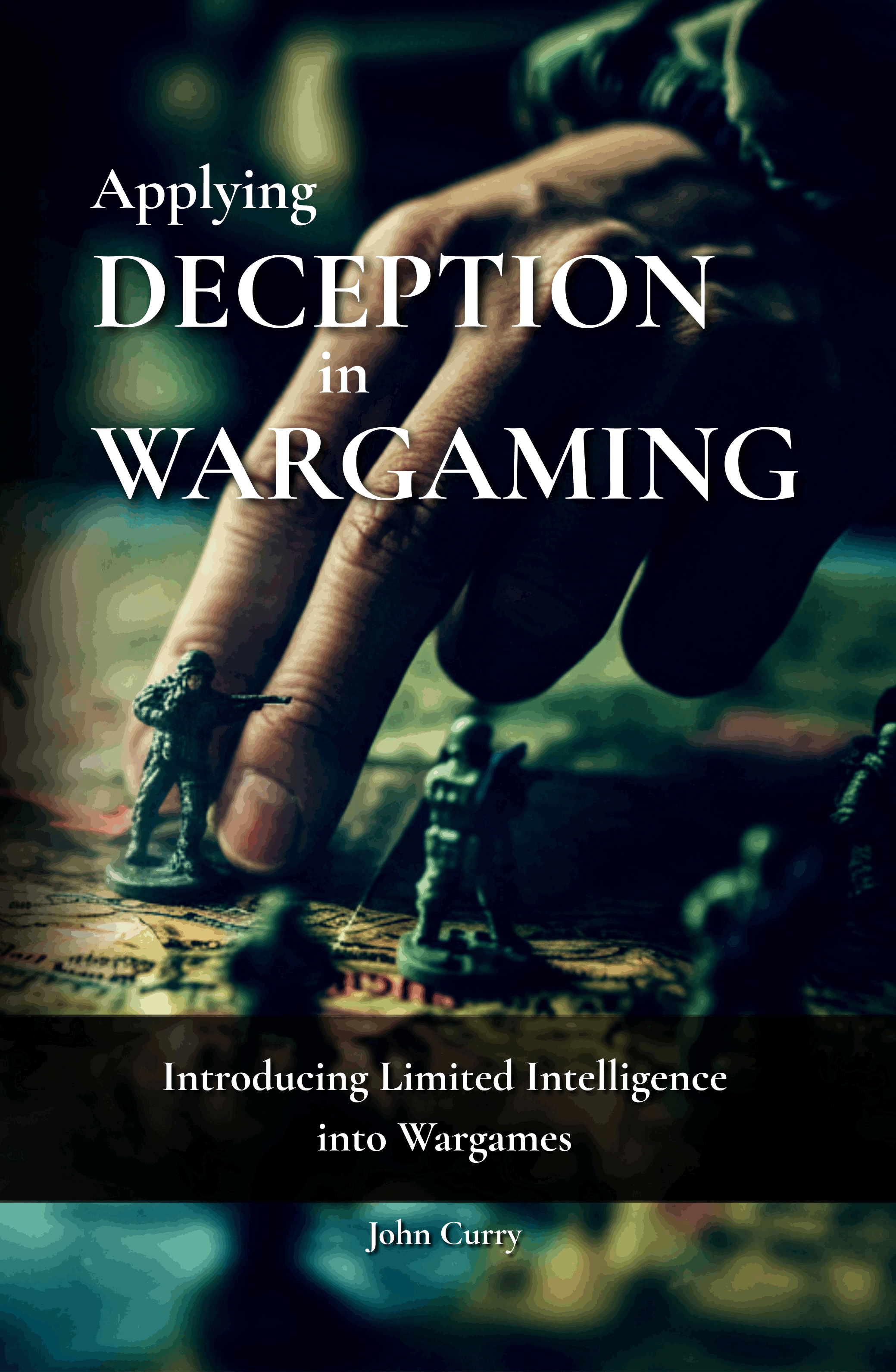
Applying Deception in Wargaming Introducing Limited Intelligence into Wargames
by John Curry |
|---|---|
|
This book covers: “Guide to applying deception in wargaming” “Techniques for adding limited intelligence to wargames” “Fog of war mechanisms for realistic gameplay” “Practical handbook for wargame designers” “Innovations in wargaming methods and practice” “Military deception concepts for hobby and professional wargamers”
Limited intelligence is pivotal in wargaming
because it realistically simulates the uncertainty and unpredictability
of real-world operations. When players only have partial information,
they must make decisions based on assumptions and incomplete data, just
as military leaders do in actual conflict. This not only tests their
analytical skills and adaptability but also exposes them to the risks
and consequences of misjudgement, fostering a deeper understanding of
operational complexity. In real warfare, deception exploits this limited
intelligence and is used to mislead opponents, mask intentions, and
create opportunities. This books is packed full of practical examples of
how wargamers can include limited intelligence, and opportunities for
deception, into their games. A wide range of game mechanisms simulating
‘the fog of war’ are discussed; from hidden scenarios, to uncertainty
about the enemy order of battle. Uncertainty, also makes hobby games
more interesting as it increases the challenge where players are
compelled to develop robust strategies for gathering information,
interpreting ambiguous signals, and managing the unknown.
This book is published by the History of Wargaming
as part of its ongoing work to document innovation in wargaming methods
and practise.
|
|
|